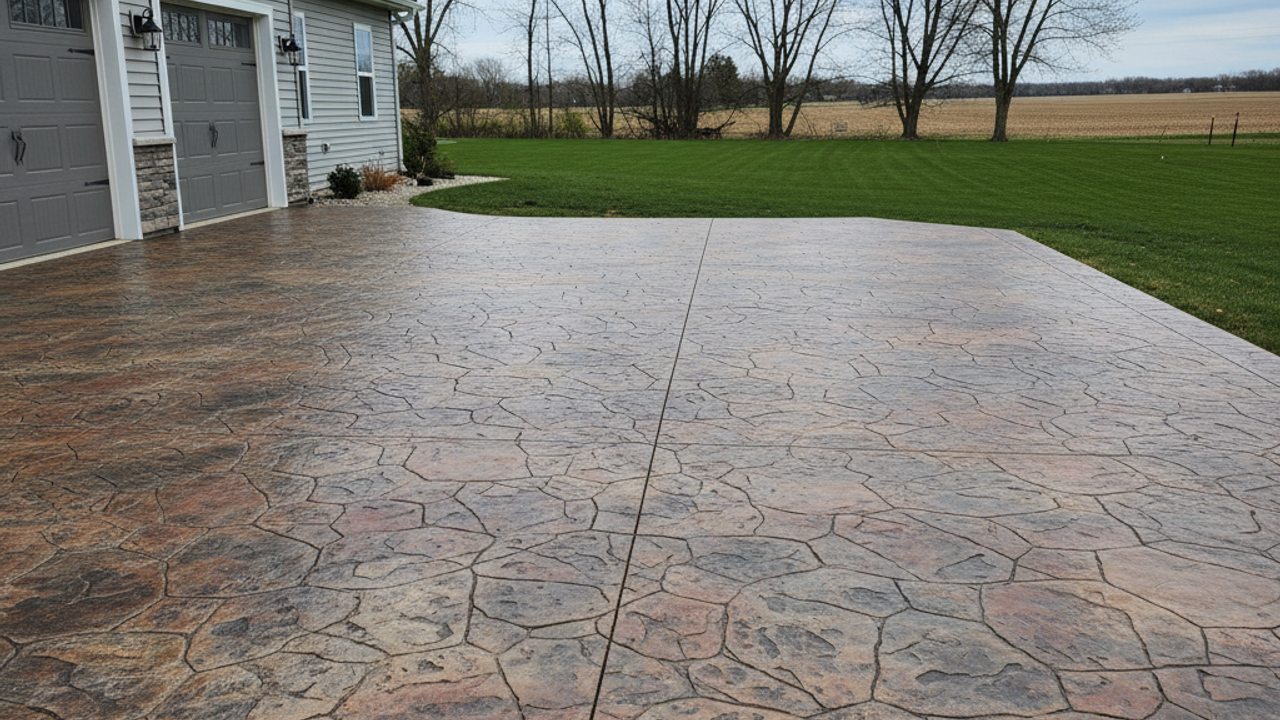
Every spring, homeowners in La Crosse start collecting quotes for a new driveway or a patio pour, and every spring some of those jobs crack apart by their second winter. The difference usually isn't the concrete truck. It's who mixed the design, who prepped the ground underneath, and whether anybody thought about what our freeze-thaw cycle does to a slab that wasn't built for it. Here's what actually separates a contractor worth hiring from one you'll be calling back in three years.
Check the license and insurance before you look at the price
Wisconsin doesn't require a special state license just to pour concrete, but any contractor doing this work in La Crosse and the surrounding towns should carry general liability insurance and workers' comp if they've got a crew. Ask for the certificate. A legitimate outfit hands it over without hesitation. If someone gets cagey about paperwork before they've even bid the job, that tells you something about how they'll handle a dispute after the concrete's already in the ground.
Also ask who's actually going to be on site pouring and finishing. Some companies sell the job, then sub the labor out to whoever's cheapest that week. That's not automatically bad, but you want to know it up front, not find out when a crew you've never met shows up in your driveway.
Get the mix design in writing, not just a square footage price
A quote that just says "4-inch driveway, $X" is missing the part that matters. Ask for the concrete's compressive strength, which should be at least 3,500 PSI for a driveway or sidewalk here, and honestly closer to 4,000 for anything that'll take a plow blade or heavy truck traffic. Ask about air entrainment. This is the one most homeowners have never heard of and it's the one that decides whether your slab survives a La Crosse winter. Air-entrained concrete has microscopic air bubbles mixed in, usually 5 to 7 percent by volume, that give freezing water somewhere to expand into instead of cracking the slab from the inside. Skip that step and you're looking at surface scaling and spalling within a couple of winters, especially with road salt tracked in from the driveway.
Ask about reinforcement too. Wire mesh has been the standard for decades, but a lot of contractors around here now use rebar, typically half-inch rebar on a 2-foot grid, because mesh has a bad habit of sinking to the bottom of the pour where it does nothing. Either can work. What matters is that someone can tell you which one they're using and why, not just "we always do it this way."
Why the ground under your feet changes the job
La Crosse sits in the Mississippi River valley, and the soil isn't the same from one side of town to the other. Down near the river and through a lot of the flatter neighborhoods, you're dealing with sandy, silty soil that drains fast but can sit close to a high water table. Get up onto the bluffs, or out toward Holmen and West Salem, and the soil turns heavier, more clay-based, which holds water and heaves more when it freezes. A contractor who's worked here for a while will grade and compact differently depending on which side of that line your lot falls on.
Base prep is where a lot of corners get cut because nobody can see it once the concrete's poured. You want a minimum of 4 inches of compacted crushed gravel under a patio or sidewalk, and more like 6 inches under a driveway, especially on clay. Skip the compaction step, or skimp on the gravel to save a truckload, and you'll see it in a year or two as settling, low spots that pond water, and cracks that follow no logical pattern because the slab is just following the ground underneath it.
Permits, setbacks, and what actually gets inspected
Inside the city of La Crosse, most new driveways, garage slabs, and foundation work need a permit through the city's building inspection office, and a lot of surrounding municipalities like Onalaska and Holmen run their own separate permit process. A decorative patio poured well inside your property line often doesn't need one, but a driveway addition or anything near a setback line usually does, and that's worth checking before the crew shows up with a mixer truck. If your contractor never brings up permits or setbacks at all, that's either because the job is small enough it genuinely doesn't need one, or because they're hoping you won't ask.
Older neighborhoods closer to downtown were mostly built before 1950, and you'll often find old sidewalk sections, buried utility lines, or even remnants of old foundations that a newer subdivision in Onalaska or French Island simply won't have. A contractor who's dug in both should know to call for utility locates before they break ground either way, but it matters more on an established street where nobody has a clean record of what's under the yard.
Timeline, curing, and what "done" actually means
Concrete doesn't set on the schedule most people expect. You can usually walk on a fresh slab after about 24 to 48 hours. Driving a car on a new driveway should wait a full 7 days at minimum. Full strength doesn't happen until around 28 days, which is why a good contractor will tell you to keep heavy equipment, dumpsters, or a loaded trailer off a new drive for a month, not a week. Anyone who tells you it's fine to park a truck on it the next day either doesn't know better or doesn't care.
Control joints matter here too. A slab is going to crack somewhere as it cures and shrinks. The joints, usually cut about 1/4 the depth of the slab, are there to tell the concrete where to crack instead of leaving it to choose on its own. For a 4-inch slab that generally means joints every 8 to 10 feet. If your quote doesn't mention joint spacing at all, ask.
Weather timing matters more in this part of Wisconsin than in most places. Pouring in July or August means fighting fast set-up time and needing to keep the surface from drying out before it's finished. Pouring in late fall means racing the first hard freeze, since fresh concrete that freezes before it's cured properly can lose a big chunk of its final strength. Most experienced contractors here won't pour after mid-to-late October without cold-weather protection, and a few will tell you flat out that your job should wait until spring instead of rushing it into the ground before the frost line moves in.
Red flags worth walking away from
- A bid that's dramatically lower than every other quote, with no explanation for the gap. Usually it means thinner slab, no rebar, or a base that's just dirt with gravel scattered on top.
- Pressure to sign today because a truck is "already scheduled" or the price is "only good this week."
- No physical address, or a business that only exists as a Facebook page with a phone number.
- Payment demanded in full up front, before any concrete has been ordered.
- Vague answers about PSI, air entrainment, or base depth when you ask directly.
None of that means you need the most expensive bid on the table. It means the price should come with real answers, not just a number.
If you're comparing quotes for a driveway, a patio, or a foundation repair anywhere around La Crosse, ask the questions above before you ask about price. You can see the kind of work and the range of jobs we handle at Classic Concrete Solutions, and we're happy to walk through the mix design and base prep for your specific lot before you commit to anyone.